Satpura: Someone’s Home, Someone’s Journey
On the website of Satpura Tiger Reserve there is a list of its achievements. Two of them, to me, seem to stand in striking contrast.
In 2016, the reserve received the National Tiger Conservation Authority’s Excellence Award for village rehabilitation and resettlement. In 2018, it received Madhya Pradesh’s award for the best tourism-friendly park.
The same forest, then, was honoured twice. Once because villages inside it were relocated. And again because tourists began arriving in that same forest.
I do not read these two achievements as official conclusions. I read them alongside memories from journeys I made in these hills.
In 2009, I was in Melghat, Maharashtra, on the south-western side of the Satpura range. In 2011, I did intensive reporting around the Tawa in what was then Hoshangabad district, now Narmadapuram, in Madhya Pradesh. The places were different, yet my encounters with the forest, the hills and the people who lived among them belonged to the same larger landscape.
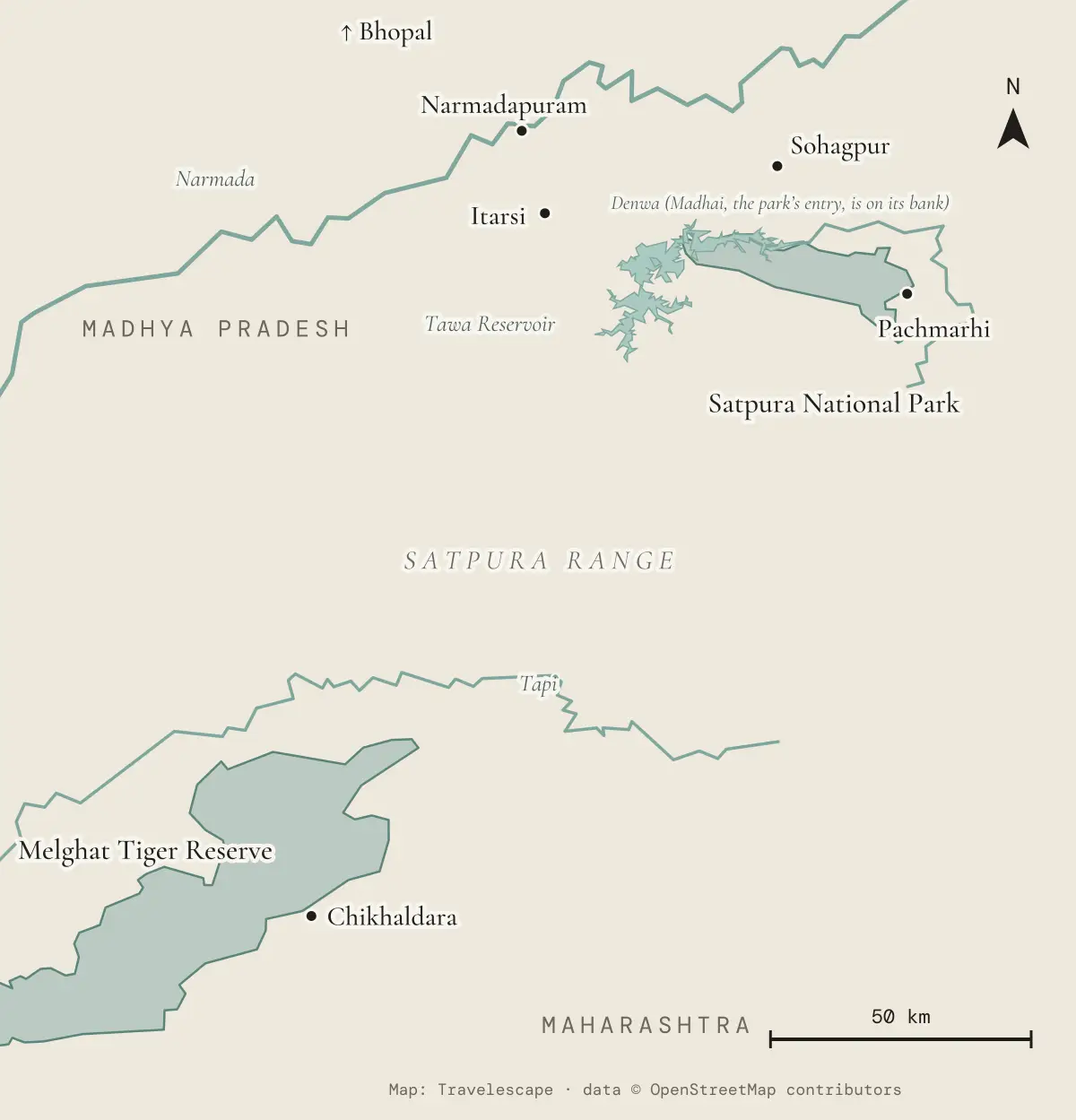
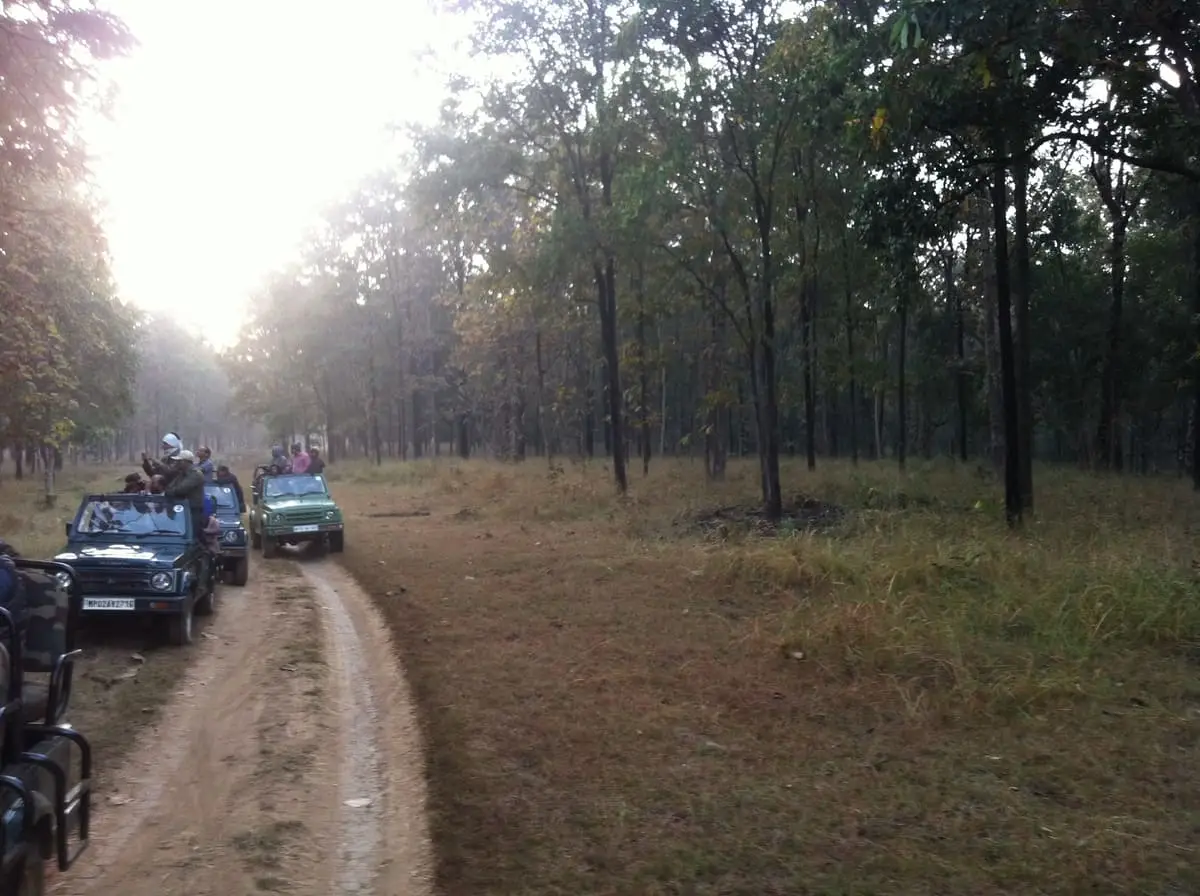
I have continued to travel through this region since then. But in this piece, I return to the memories of those two journeys. Today, I mostly encounter Satpura’s jeep safaris, boat rides and tourist accommodations through news reports, photographs and publicly available documents.
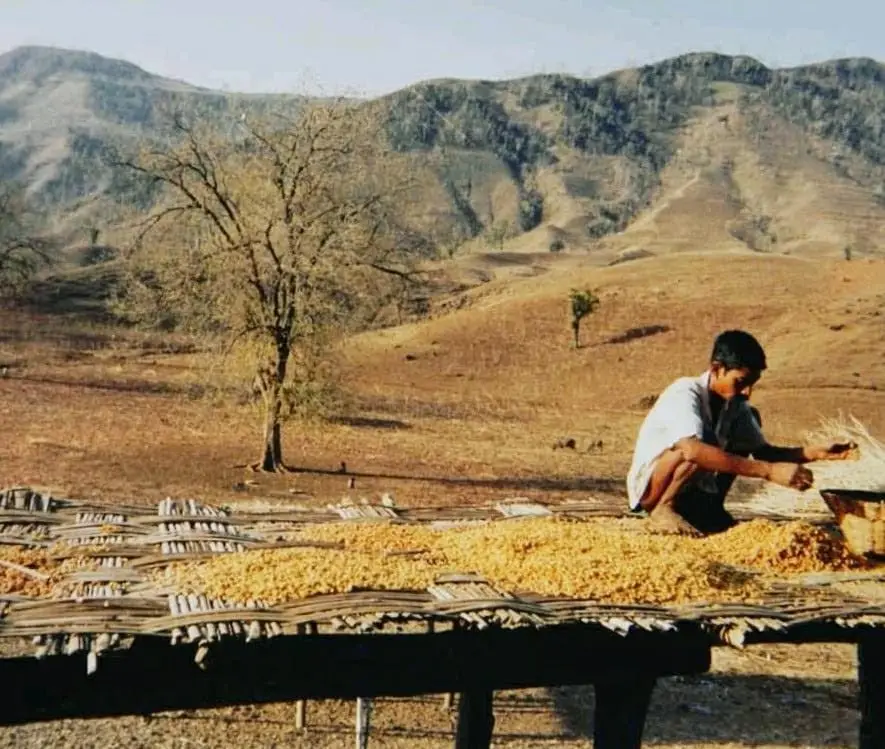
One morning in 2009, we were riding a motorcycle down from Chikhaldara towards Salita. It was very early. The air was cold. The sun was slowly rising behind the hills.
We felt as if we were the first to wake in the forest. But others had woken before us. Someone had already left for work. Someone was already on the road.
For a while, the road, the hills and the rising sun remained visible together. Had that morning been captured in a photograph, it could have appeared on the cover of a travel magazine. But we had not set out to watch the sunrise. We had somewhere to reach. The sun simply appeared along the way.
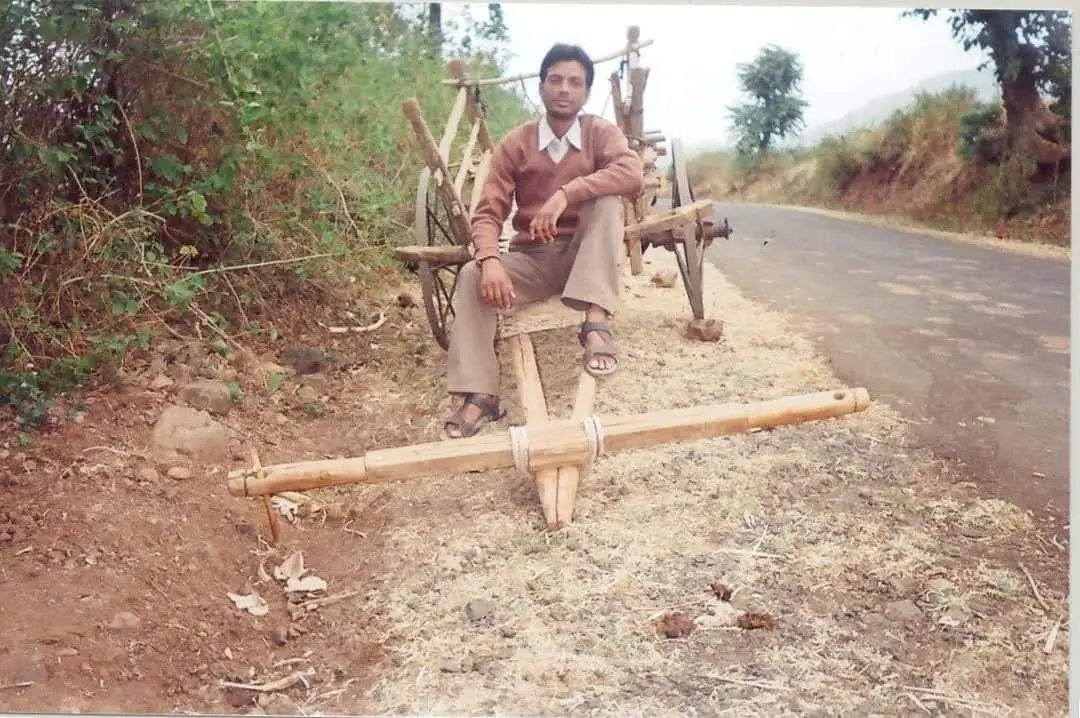
There was another morning on the road to Makhla village. Five or six women were coming down a hillside path, water pots balanced on their heads. Children walked with them. Some of the children rolled old bicycle tyres along the road. The water source was about two kilometres away. They would have to carry the water back up the hills.
I watched them for a while. At the time, it was simply a village morning to me. Today, the same scene through a camera could become a beautiful picture of rural life: a hillside path, morning light, pots on heads, children walking alongside.
But the weight of the pot does not enter the picture. The two-kilometre distance does not enter it either. Nor does the fact that water is a household necessity and that this path has to be walked every day to fetch it.
In Salita, the same hillside was a morning scene. In Makhla, the same hillside was a two-kilometre path.
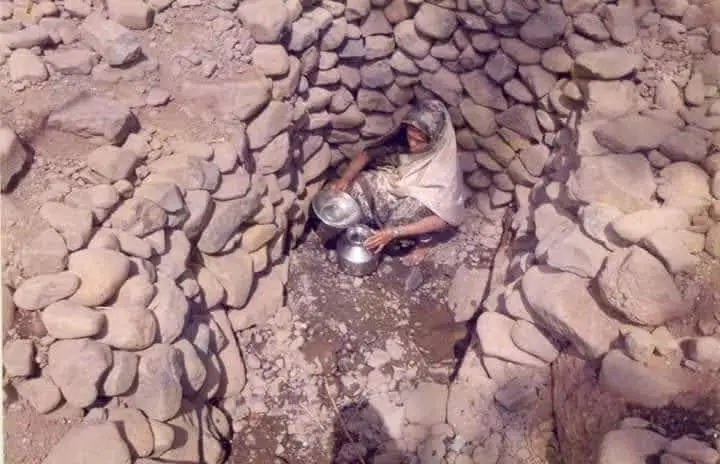
During that same reporting trip in Melghat in 2009, I met an elderly Korku man. He gave his name as Dhandekar. He spoke in Korku. Kaluram Belsare, who had come with me on the motorcycle, explained his words to me in Hindi.
Dhandekar spoke of things that belonged to a much older time. He remembered that the first thing he had bought from the market was salt. Speaking about the British period, he recalled forest work, cutting wood and earning wages. Then he began talking about Korku women, their rights and their freedom.
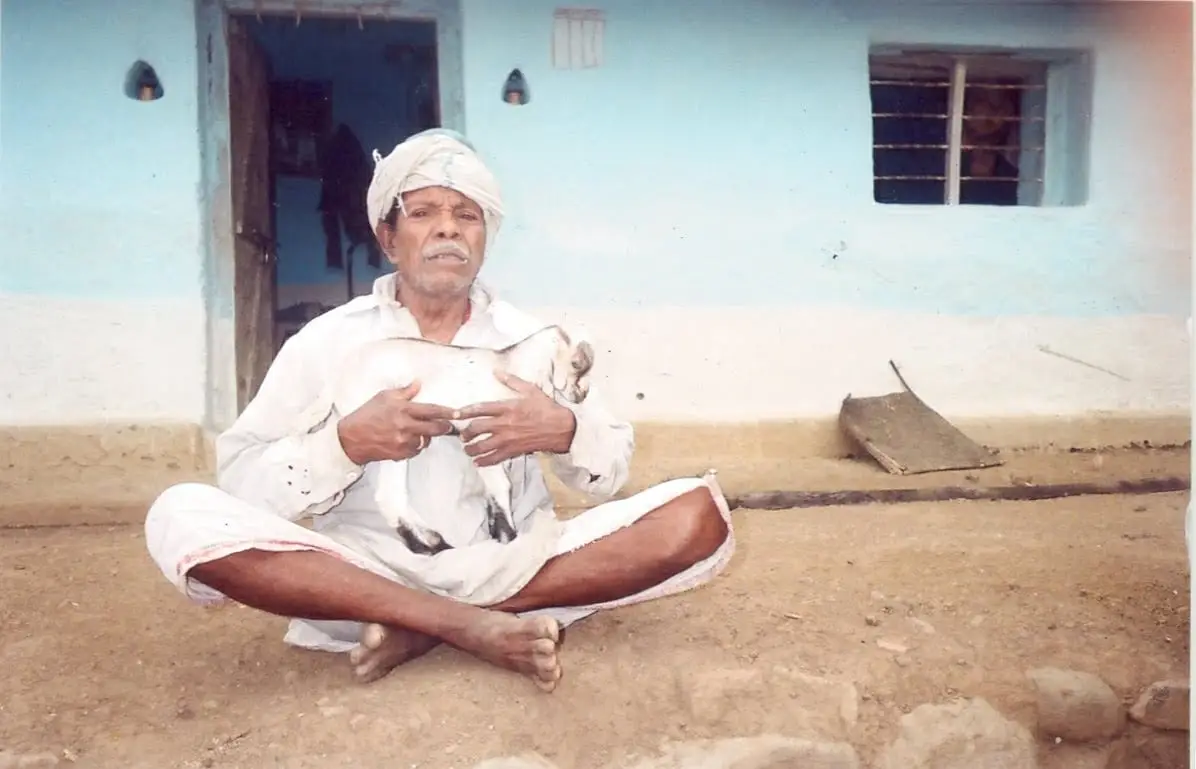
In his account, the forest was not biodiversity recorded in a book. Which season brought what, which tree was useful for what, where mahua grew, where honey and chironji could be found, how kodo-kutki fitted into the cycle of life, which footpath led where: all of this was part of his lived experience.
That day I heard the forest in two voices: first Dhandekar’s, and then Kaluram Belsare’s as he explained his words to me in Hindi. Between those two voices was a knowledge of the forest that no tourism brochure could contain.
When I reached the Tawa area in 2011, water appeared with a different meaning.
A dam had already been built on the Tawa river near Narmadapuram, then Hoshangabad. Behind it, water stretched across a wide expanse. Beneath that water lay the land and memories of settlements belonging to many families.
I sat among tribal families who fished. There were boats, nets, fish that had to be taken to market and papers belonging to the fishermen’s cooperative. The same water that had covered their land had now become their livelihood.
It was difficult to see that water merely as a reservoir. One fisherman told me that his relationship with the water was the same as a fish’s relationship with water. If he were cut off from it, where would he go? How would he live?
This right had not come easily. People displaced by the Tawa dam had struggled for the right to fish. The Tawa Matsya Sangh was formed in 1996. After the struggle, fishing rights were secured. According to available reports, people from the displaced villages began fishing in the reservoir under a cooperative arrangement from 1997. It brought a major change to their livelihoods.
An important part of that struggle was that the displaced people did not want to remain merely recipients of compensation. They wanted rights over the resource around which their new lives had come to be organised.
In later years, those rights again came under threat. A 2005 report recorded the apprehension that fishing in the Tawa reservoir might be stopped because the reservoir was linked to a protected forest area. At the time, fishing was said to support the livelihoods of nearly four thousand families.
Tourism was not the question before me then. The questions were different. Whose water was this? Who had rights over the fish? And what resource would a displaced family have to live from in its new place?
Today, the same water of the Tawa is also viewed through the lens of tourism. The official tariff information of Satpura Tiger Reserve lists activities such as boat rides and motorboats between Tawa and Madhai.
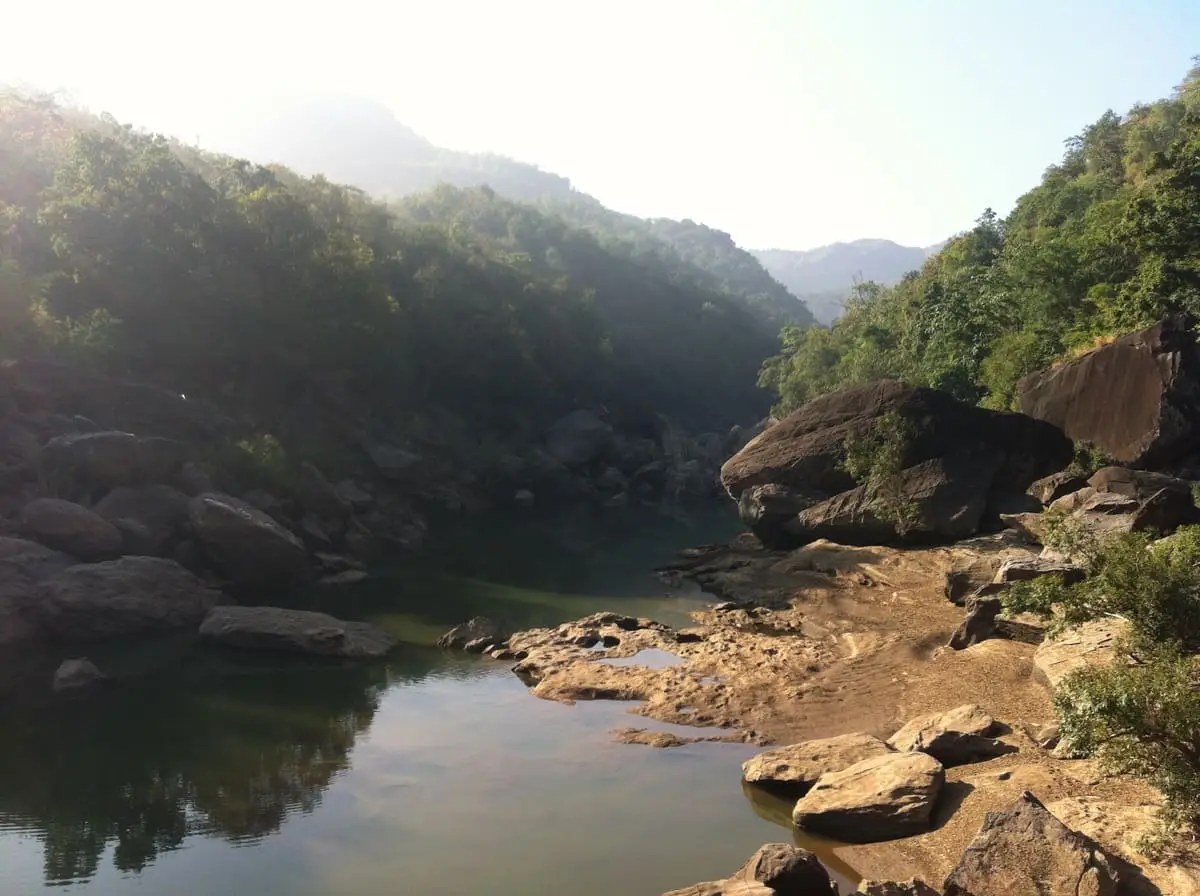
Two different kinds of journeys are possible on the same water. But before drawing any conclusion from that difference, the reserve’s own position needs to be considered.
According to the reserve’s website, the process of village rehabilitation began in 2004-05. After Dhai village, large forest villages such as Bori, Sakot and Khakrapura were resettled outside the reserve in 2009-10, 2010-11 and 2011-12. According to the reserve, by 2016 more than 3,243 families from 38 villages in the core area had been resettled outside, and approximately 8,450 hectares had been made available for wildlife. Between 2004-05 and 2021-22, a total of 49 villages were resettled outside the reserve.
The reserve presents this as an important achievement for conservation. It says that the process created more continuous habitat for wildlife and reduced human pressure on the forest. According to the reserve, access to electricity, drinking water, schools, markets and health facilities also improved after resettlement. It further states that forest offences declined and the presence of wild herbivores increased after resettlement.
According to the reserve, resettlement was carried out through two options. Under one, each family received a package of 15 lakh rupees. Under the other, the forest department handled the rehabilitation and resettlement process.
There is another aspect that matters here. The reserve itself acknowledges that new livelihood opportunities were necessary for people resettled outside the forest.
Its information on community engagement records efforts to connect local youth with employment in tourism and other activities through training. Training has been provided for work as guides, drivers, cooks and caretakers. There is also mention of 58 new guides being trained in 2021, along with vehicle-driving and hospitality training for youth from resettled villages and surrounding areas.
This is the reserve’s position. It needs to be recorded.
My question is different. I am not against tourism. But changing a home is not simply a matter of changing a house. A mahua tree, a water source, a field, the footpath to another village, the things gathered from the forest, kinship and community life together make a home. When displacement takes place, a house may be provided in place of a house, but an entire world is lost, and there is no compensation for that world.
For Gond and Korku communities, the relationship with the forest did not depend only on whose name appeared on the papers for a particular piece of land. Knowledge of use, paths, seasons and resources, carried across generations, was also part of that relationship.
This is where the Forest Rights Act raises an important question in this story.
The Forest Rights Act, 2006, lays down a specific legal process for relocation from critical wildlife habitats in protected areas. It requires forest rights to be identified and determined, a finding that the presence or activities of people are causing irreversible damage to wildlife, and a determination that no other reasonable option for coexistence is available.
It also requires a rehabilitation and livelihood package, the free and informed written consent of the gram sabha, and the completion of promised facilities and land allocation at the resettlement site.
The law also gives the gram sabha an important role. It initiates the process of recognising forest rights and can consider and pass a resolution on the rehabilitation package.
On the Satpura Reserve website, I found information about the two resettlement options. But I did not find, on those pages, the gram sabha resolutions through which the process was approved in the different villages.
Therefore, I cannot claim that all resettlements were forced. But I can ask how easily the documents relating to the rights, consent and decision-making process of those who were resettled are publicly available.
And then the story of tourism appears. Today, a local person may be the tourist’s guide. He identifies the forest. He drives the vehicle. He cooks. He arranges accommodation. He recognises a tree. He knows the meaning of a path.
Satpura Reserve itself is training local youth for such tourism-related work. This is employment. And employment matters.
But employment and rights are not the same thing. Knowing the forest and participating in decisions about the forest are not the same thing either.
He may know the forest, yet it remains a separate question who decides which part of the forest will be opened, when it will be opened, what the limits of tourism will be, what role local people will have and how much of the income generated will reach the community.
The answers to these questions will depend on different arrangements and documents. I am not presenting them here as facts. I am presenting them as questions of inequality that arose for me from my journeys.
The women of Makhla return to me. For them, the hillside path was not natural beauty. It was the path to water.
The morning at Chikhaldara was sunrise for me. For someone living there, it would simply have been the beginning of another day.
Perhaps this is the hardest thing about Satpura. A place can change its meaning without changing its form.
To understand this change only through the story of employment does not seem sufficient to me. The knowledge of someone whose relationship with the forest goes back generations may be useful to tourism, but the value of that knowledge is complete only when it is accompanied by a share in decision-making.
And perhaps that is why those two awards need to be read together.
In 2016, the resettlement of villages from the forest was honoured.
In 2018, tourism in the same forest was honoured.
Between those two awards lies the story of the people who have had to live through that change.
If two boats were to meet today on the waters of the Tawa, one might have gone out to catch fish. The other might have come to see the hills and the water.
The water beneath them would be the same.
For one, it is life. For the other, it is a journey.
And the person who has known this forest and this water for generations: is he truly a host in his own forest, or is he serving someone else’s guest in his own home?
Shirish Khare is an independent journalist and writer who has covered rural India, social issues and marginalised communities since 2002. His books include Ek Desh Barah Duniya and Nadi Sindoori.
He travelled to Pipariya and the surrounding Satpura region on a reporting assignment for a national magazine, where he worked as a correspondent; the magazine arranged his basic travel and accommodation.
Sources
- Satpura Tiger Reserve, Village Relocation
- Satpura Tiger Reserve, Achievements
- Satpura Tiger Reserve, Community Engagement
- Satpura Tiger Reserve, Livelihood Initiatives
- Ministry of Tribal Affairs, Forest Rights Act and Rules
- Down To Earth, Fishing in Troubled Waters (15 February 2001)
- Down To Earth, Fishing jobs (15 May 2005)
Written in Hindi by Shirish Khare; translated into English by the writer with his daughter's help, and edited by Travelescape.
Read the original in Hindi
सतपुड़ा: किसी का घर, किसी की यात्रा
सतपुड़ा टाइगर रिज़र्व की वेबसाइट पर उसकी उपलब्धियों की एक सूची है। उसमें दो उपलब्धियाँ मेरे लिए एक-दूसरे के सामने खड़ी दिखाई देती हैं।
2016 में रिज़र्व को गाँवों के पुनर्वास और पुनर्स्थापन के लिए राष्ट्रीय बाघ संरक्षण प्राधिकरण का उत्कृष्टता पुरस्कार मिला। 2018 में उसे मध्य प्रदेश का सर्वश्रेष्ठ पर्यटन-अनुकूल पार्क का पुरस्कार मिला।
यानी एक ही जंगल को दो बार सम्मान मिला। पहली बार इसलिए कि उसके भीतर बसे गाँव बाहर चले गए। दूसरी बार इसलिए कि उसी जंगल में पर्यटक आने लगे।
मैं इन दोनों उपलब्धियों को किसी सरकारी निष्कर्ष की तरह नहीं पढ़ता। मैं इन्हें उन यात्राओं की स्मृति के साथ पढ़ता हूँ जो मैंने इन पहाड़ियों में की हैं। 2009 में मैं महाराष्ट्र के मेलघाट में था, जो सतपुड़ा का दक्षिण-पश्चिमी हिस्सा है। 2011 में मैंने मध्य प्रदेश के तत्कालीन होशंगाबाद जिले, अब नर्मदापुरम, में तवा के आसपास गहन रिपोर्टिंग की। इन दोनों यात्राओं के बीच जगहें अलग थीं, लेकिन जंगल, पहाड़ और उनके बीच रहने वाले लोगों से मेरा सामना एक ही बड़े भू-दृश्य में हुआ।
इसके बाद भी इस इलाके में आता-जाता रहा हूँ। लेकिन इस लेख में मैं उन्हीं दो यात्राओं की स्मृतियों पर लौट रहा हूँ। आज का सतपुड़ा, जिसमें जीप सफ़ारी, नाव यात्राएँ और पर्यटक ठहरने की व्यवस्थाएँ हैं, उसे मैं मुख्यतः खबरों, तस्वीरों और उपलब्ध दस्तावेज़ों में देखता हूँ।
2009 में एक सुबह हम चिखलदरा से सलीता की ओर मोटरसाइकिल पर नीचे उतर रहे थे। बहुत सुबह का समय था। ठंड लग रही थी। पहाड़ों के पीछे से सूरज धीरे-धीरे ऊपर आ रहा था।
हमें लग रहा था कि जंगल में सबसे पहले हम ही जागे हैं। लेकिन हमसे पहले लोग जाग चुके थे। कोई अपने काम के लिए निकल चुका था, कोई रास्ते पर था।
सड़क, पहाड़ और सूरज कुछ देर तक एक साथ दिखाई देते रहे। उस सुबह को अगर कोई तस्वीर में रख दे तो वह यात्रा-पत्रिका के आवरण पर छप सकती थी। लेकिन हम वहाँ सूर्योदय देखने नहीं निकले थे। हमें कहीं पहुँचना था। सूरज रास्ते में मिल गया था।
कुछ साल बाद जब मैं पर्यटन की तस्वीरों में ऐसे ही पहाड़ी रास्तों और सूर्योदयों को देखता हूँ तो उस सुबह की याद आती है। दृश्य वही हो सकता है, लेकिन वहाँ होने की वजह अलग हो सकती है।
माखला गाँव के रास्ते पर एक और सुबह थी। पाँच-छह औरतें पहाड़ी रास्ते से आ रही थीं। सिर पर पानी के घड़े थे। उनके साथ बच्चे थे। कुछ बच्चे साइकिल के पुराने टायर सड़क पर लुढ़काते हुए चल रहे थे। पानी करीब दो किलोमीटर दूर था। उन्हें पहाड़ियों से पानी लेकर लौटना था।
मैं कुछ देर उन्हें देखता रहा। उस समय मेरे लिए वह गाँव की सुबह थी। आज किसी कैमरे में वही दृश्य आए तो वह ग्रामीण जीवन की एक सुंदर तस्वीर बन सकता है। पहाड़ी रास्ता, सुबह की रोशनी, सिर पर घड़े, साथ चलते बच्चे।
लेकिन तस्वीर में घड़े का वज़न नहीं आता। दो किलोमीटर की दूरी भी तस्वीर में नहीं आती। यह भी नहीं आता कि पानी घर की जरूरत है और उसे लाने के लिए रोज़ यह रास्ता तय करना पड़ता है।
सलीता में वही पहाड़ी सुबह का दृश्य थी। माखला में वही पहाड़ी दो किलोमीटर का रास्ता थी।
मेलघाट की उसी 2009 की रिपोर्टिंग में एक बुजुर्ग कोरकू व्यक्ति से मुलाकात हुई। उन्होंने अपना नाम धाण्डेकर बताया था। वे कोरकू में बोल रहे थे और मेरे साथ मोटर साइकिल पर आए कालूराम बेलसरे उनकी बातें मेरे लिए हिन्दी में बता रहे थे।
धाण्डेकर बहुत पुरानी बातें बता रहे थे। उन्होंने बताया कि बाज़ार से खरीदी गई पहली चीज़ उन्हें नमक याद है। अंग्रेज़ों के समय की बात करते हुए उन्होंने जंगल में मिलने वाले काम और मजदूरी का भी जिक्र किया। फिर वे कोरकू औरतों की बातें करने लगे, उनके अधिकार और उनकी आज़ादी की बातें।
उनकी बातों में जंगल किसी किताब में दर्ज जैव-विविधता नहीं था। किस मौसम में क्या मिलता है, कौन-सा पेड़ किस काम आता है, महुआ कहाँ मिलता है, शहद और चिरौंजी कहाँ से आती है, कोदो-कुटकी कहाँ से जुड़ी है, कौन-सी पगडंडी कहाँ निकलती है, यह सब उनके अनुभव का हिस्सा था।
एक बाहर से आया आदमी जिस पगडंडी को पतला-सा रास्ता समझकर पार कर सकता है, किसी स्थानीय व्यक्ति के लिए वह रास्ता कई दिशाओं में खुलने वाला पूरा नक्शा हो सकता है।
मैंने उस दिन जंगल को दो आवाज़ों से सुना। पहले धाण्डेकर की, फिर कालूराम बेलसरे की, जो उनकी बातों का हिन्दी में अर्थ बता रहे थे। दोनों के बीच जंगल के बारे में एक ऐसा ज्ञान था जो किसी पर्यटन पुस्तिका में नहीं लिखा था।
2011 में जब मैं तवा के इलाके में पहुँचा तो पानी का अर्थ अलग तरह से सामने आया।
नर्मदापुरम, तब होशंगाबाद के निकट तवा नदी पर बाँध बन चुका था। उसके पीछे दूर तक पानी फैला था। इस पानी के नीचे कई परिवारों की जमीन और बस्तियों की स्मृतियाँ थीं।
मैं मछली पकड़ने वाले आदिवासी परिवारों के बीच बैठा। नावें थीं। जाल थे। पकड़ी हुई मछलियाँ थीं जिन्हें बाजार तक पहुँचाना था। मछुआरों की सहकारी समिति के कागज थे। जिस पानी ने उनकी जमीन ढक ली थी, उसी पानी में अब उनकी रोज़ी थी।
वहाँ पानी को केवल जलाशय की तरह देखना मुश्किल था। एक मछुआरे ने मुझसे कहा कि पानी से उसका वही रिश्ता है जो पानी से मछली का। पानी से काट दिया गया तो वह कहाँ जाएगा, जिएगा कैसे?
यह अधिकार उन्हें आसानी से नहीं मिला था। तवा बाँध से विस्थापित लोगों ने मछली पकड़ने के अधिकार के लिए आंदोलन किया। 1996 में 'तवा मत्स्य संघ' बना और संघर्ष के बाद मछली पकड़ने के अधिकार मिले। उपलब्ध रिपोर्टों के अनुसार, 1997 से विस्थापित गाँवों के लोग सहकारी व्यवस्था के तहत जलाशय में मछली पकड़ने लगे। इससे उनकी आजीविका में बड़ा बदलाव आया।
उस संघर्ष में एक महत्वपूर्ण बात यह थी कि विस्थापित लोग केवल मुआवज़ा पाने वाले लोग बनकर नहीं रहना चाहते थे। वे उस संसाधन पर अधिकार चाहते थे जिसके साथ उनका नया जीवन जुड़ गया था।
बाद के वर्षों में यही अधिकार फिर संकट में आए। 2005 की एक रिपोर्ट में तवा जलाशय में मछली पकड़ने पर रोक की आशंका दर्ज हुई थी। वजह यह बताई गई कि जलाशय संरक्षित वन क्षेत्र से जुड़ा है। उस समय मछली पकड़ना लगभग चार हजार परिवारों की आजीविका से जुड़ा बताया गया था।
तब पर्यटन का सवाल मेरे सामने नहीं था। सवाल दूसरे थे। पानी किसका है? मछली पर किसका अधिकार है? और किसी विस्थापित परिवार को नई जगह पर जीने के लिए कौन-सा संसाधन मिलेगा?
आज उसी तवा के पानी को पर्यटन की नजर से भी देखा जाता है। सतपुड़ा टाइगर रिज़र्व की आधिकारिक शुल्क सूची में तवा और मढई के बीच नाव यात्रा तथा मोटरबोट जैसी गतिविधियाँ दर्ज हैं।
एक ही पानी में दो अलग तरह की यात्राएँ संभव हैं। लेकिन, इससे पहले कि इस फर्क का कोई निष्कर्ष निकाला जाए, सतपुड़ा रिज़र्व का अपना पक्ष देखना जरूरी है।
रिज़र्व की वेबसाइट के अनुसार गाँवों के पुनर्वास की प्रक्रिया 2004-05 में शुरू हुई। धाई गाँव के बाद बोरी, साकोट और खाकरापुरा जैसे बड़े वन गाँवों को 2009-10, 2010-11 और 2011-12 में बाहर बसाया गया। रिज़र्व के अनुसार 2016 तक कोर क्षेत्र के 38 गाँवों से 3,243 से अधिक परिवारों को बाहर बसाया जा चुका था और लगभग 8,450 हेक्टेयर क्षेत्र वन्यजीवों के लिए उपलब्ध हुआ। 2004-05 से 2021-22 तक कुल 49 गाँवों को रिज़र्व से बाहर बसाया गया।
रिज़र्व इसे संरक्षण की दृष्टि से महत्वपूर्ण उपलब्धि बताता है। उसका कहना है कि इससे वन्यजीवों के लिए अधिक सतत आवास बना और जंगल पर मानवीय दबाव कम हुआ। उसके अनुसार पुनर्वास के बाद बिजली, पेयजल, स्कूल, बाजार और स्वास्थ्य जैसी सुविधाओं तक पहुँच भी बेहतर हुई। रिज़र्व यह भी बताता है कि पुनर्वास के बाद वन अपराधों की संख्या कम हुई और जंगली शाकाहारी जानवरों की मौजूदगी बढ़ी।
रिज़र्व के अनुसार पुनर्वास दो विकल्पों के साथ किया गया। एक में प्रत्येक परिवार को 15 लाख रुपये का पैकेज दिया गया। दूसरे में वन विभाग ने पुनर्वास और पुनर्स्थापन की प्रक्रिया संभाली। रिज़र्व इसे सफल और पारदर्शी पुनर्वास कार्यक्रम के रूप में प्रस्तुत करता है।
उसका एक और पक्ष महत्वपूर्ण है। रिज़र्व खुद मानता है कि बाहर बसाए गए लोगों के लिए आजीविका के नए अवसर जरूरी थे। उसकी सामुदायिक भागीदारी संबंधी जानकारी के अनुसार युवाओं को प्रशिक्षण देकर पर्यटन और दूसरी गतिविधियों में रोजगार से जोड़ने की कोशिश की गई। मार्गदर्शक, वाहन चालक, रसोइया और देखभाल से जुड़े कामों के लिए प्रशिक्षण दिया गया। 2021 में 58 नए मार्गदर्शकों को प्रशिक्षण दिए जाने और पुनर्वासित गाँवों तथा आसपास के युवाओं के लिए वाहन चलाने और आतिथ्य संबंधी प्रशिक्षण का भी उल्लेख है।
यह रिज़र्व का पक्ष है। इसे दर्ज करना जरूरी है।
मेरा सवाल इससे अलग है। मैं पर्यटन के खिलाफ नहीं हूँ। लेकिन, घर बदलना सिर्फ घर बदलना नहीं होता। एक महुआ का पेड़, पानी का स्रोत, खेत, दूसरे गाँव तक जाने वाली पगडंडी, जंगल में मिलने वाली चीज़ें, रिश्तेदारी और सामुदायिक जीवन मिलकर घर बनाते हैं। जब विस्थापन होता है तो घर के बदले घर तो मिल सकता है, लेकिन पूरी एक दुनिया छीन ली जाती है, जिसका मुआवजा संभव नहीं।
गोंड और कोरकू समुदायों के लिए जंगल से संबंध केवल इस बात पर निर्भर नहीं था कि किस जमीन का कागज किसके नाम है। पीढ़ियों से चले आ रहे उपयोग, रास्तों, मौसमों और संसाधनों का ज्ञान भी उस संबंध का हिस्सा था।
यहीं वन अधिकार कानून इस कहानी में एक महत्वपूर्ण सवाल रखता है।
'वन अधिकार अधिनियम, 2006' में संरक्षित क्षेत्रों के महत्वपूर्ण वन्यजीव आवास से पुनर्वास के लिए एक विशेष कानूनी प्रक्रिया है। इसमें यह शर्त रखी गई है कि वन अधिकारों की पहचान और निर्धारण हो, यह स्थापित हो कि वहाँ रहना या गतिविधियाँ वन्यजीवों के लिए अपरिवर्तनीय नुकसान पैदा कर रही हैं, सह-अस्तित्व का कोई दूसरा उचित विकल्प उपलब्ध नहीं है, पुनर्वास और आजीविका का पैकेज तैयार हो, ग्राम सभा की स्वतंत्र और सूचित लिखित सहमति हो और पुनर्वास स्थल पर सुविधाएँ तथा जमीन का आवंटन वादे के अनुसार पूरा हो।
कानून में ग्राम सभा की भूमिका भी स्पष्ट है। वह वन अधिकारों के दावों की प्रक्रिया शुरू करती है और पुनर्वास पैकेज पर विचार कर प्रस्ताव पारित कर सकती है।
सतपुड़ा रिज़र्व की वेबसाइट पर मुझे पुनर्वास को “स्वैच्छिक” बताया गया है और दो विकल्पों की जानकारी मिलती है। लेकिन जिन ग्राम सभाओं के प्रस्तावों के आधार पर अलग-अलग गाँवों में यह प्रक्रिया पूरी हुई, वे दस्तावेज़ मुझे उन पन्नों पर नहीं मिले।
इसीलिए मैं यह दावा नहीं कर सकता कि सभी पुनर्वास जबरन हुए। लेकिन मैं यह सवाल जरूर पूछ सकता हूँ कि जिन लोगों का पुनर्वास हुआ, उनके अधिकारों, सहमति और निर्णय-प्रक्रिया के दस्तावेज़ सार्वजनिक रूप से कितने आसानी से उपलब्ध हैं।
और फिर पर्यटन की कहानी सामने आती है। आज स्थानीय व्यक्ति पर्यटक के लिए मार्गदर्शक है। वह जंगल की पहचान बताता है। वाहन चलाता है। खाना बनाता है। ठहरने की व्यवस्था करता है। किसी पेड़ को पहचानता है। किसी रास्ते का अर्थ जानता है।
सतपुड़ा रिज़र्व खुद स्थानीय युवाओं को पर्यटन से जुड़े ऐसे कामों के लिए प्रशिक्षित कर रहा है। यह रोजगार है। और रोजगार महत्वपूर्ण है।
लेकिन रोजगार और अधिकार एक ही चीज़ नहीं हैं। जंगल की जानकारी होना और जंगल के फैसलों में शामिल होना भी एक बात नहीं है।
कोई स्थानीय व्यक्ति पर्यटक को बता सकता है कि यह महुआ का पेड़ है। वह बता सकता है कि इस मौसम में यहाँ क्या मिलता है। वह पगडंडी पहचान सकता है। लेकिन यह जरूरी नहीं कि वही तय करे कि उस रास्ते पर कितने पर्यटक जाएँगे।
वह जंगल को जानता हो सकता है, पर यह अलग सवाल है कि जंगल के किस हिस्से को कब खोला जाएगा, पर्यटन की सीमा क्या होगी, स्थानीय लोगों की भूमिका क्या होगी और उससे होने वाली कमाई का कितना हिस्सा समुदाय तक पहुँचेगा।
इन सवालों के जवाब अलग-अलग व्यवस्थाओं और दस्तावेज़ों में होंगे। मैं उन्हें यहाँ तथ्य की तरह नहीं रख रहा। मैं उन्हें उस असमानता के सवाल के रूप में रख रहा हूँ जो मेरी यात्राओं से मेरे सामने आई।
माखला की औरतें मुझे फिर याद आती हैं। उनके लिए पहाड़ी रास्ता कोई प्राकृतिक सौंदर्य नहीं था। वह पानी तक जाने का रास्ता था।
चिखलदरा की सुबह मेरे लिए सूर्योदय थी, लेकिन वहाँ रहने वाले किसी व्यक्ति के लिए वह दिन की शुरुआत रही होगी।
धाण्डेकर के लिए जंगल पेड़ों का दृश्य नहीं था। वह उनकी भाषा में मौजूद जीवन था। कालूराम बेलसरे उनकी बात हिन्दी में बता रहे थे, और मैं उस अनुवाद के जरिए जंगल को समझने की कोशिश कर रहा था।
तवा में पानी किसी के लिए विस्थापन की स्मृति था और किसी के लिए मछली पकड़ने की आजीविका।
आज वही भू-दृश्य पर्यटन का अनुभव भी बन सकता है।
शायद यही सतपुड़ा की सबसे कठिन बात है। कोई जगह अपना रूप बदले बिना भी अपना अर्थ बदल सकती है।
जिस जंगल को एक समय मानवीय बस्तियों से खाली करना संरक्षण की उपलब्धि माना गया, उसी जंगल में आज मनुष्य एक दूसरे रूप में वापस आता है। अब वह पर्यटक है। वह जंगल को देखने आता है। और उसके साथ स्थानीय व्यक्ति भी आता है, जो जंगल को दिखाता और समझाता है।
स्थानीय व्यक्ति की भूमिका बदल जाती है। पहले वह जंगल में रहने वाला था। अब वह जंगल में आने वाले को रास्ता दिखाने वाला है।
इस बदलाव को केवल रोजगार की कहानी में समेटना मुझे पर्याप्त नहीं लगता। कारण, जिस व्यक्ति का जंगल से संबंध पीढ़ियों पुराना है, उसका ज्ञान पर्यटन के लिए उपयोगी हो सकता है, लेकिन उस ज्ञान की कीमत तभी पूरी होगी जब उसके साथ निर्णय में हिस्सेदारी भी हो।
मैंने 2009 में जंगल को एक बुजुर्ग की भाषा में सुना था। 2011 में उसी बड़े भू-दृश्य में पानी को उन लोगों के साथ देखा था जिनकी जमीन उस पानी में चली गई थी और जिन्होंने बाद में उसी पानी में अपनी आजीविका खोजी।
आज खबरों में सतपुड़ा को देखकर मुझे इन दोनों यात्राओं के दृश्य सजीव हो उठते हैं।
मुझे माखला की औरतों के घड़े दिखाई देते हैं। चिखलदरा की सुबह दिखाई देती है। धाण्डेकर की आवाज़ सुनाई देती है। कालूराम बेलसरे का अनुवाद सुनाई देता है। तवा का पानी दिखाई देता है। नाव और जाल दिखाई देते हैं।
इन दृश्यों के बीच सतपुड़ा मेरे लिए सिर्फ जंगल नहीं रह जाता। वह एक ऐसी जगह बन जाता है जहाँ संरक्षण, विस्थापन, आजीविका और पर्यटन एक-दूसरे से अलग नहीं हैं।
और शायद इसी वजह से उन दो पुरस्कारों को साथ पढ़ना जरूरी है।
2016 में जंगल से गाँवों का पुनर्वास सम्मानित हुआ।
2018 में उसी जंगल का पर्यटन सम्मानित हुआ।
इन दोनों के बीच जो लोग हैं, उनकी कहानी इन दोनों पुरस्कारों के बीच कहीं दिखाई देती है।
तवा के पानी पर आज अगर दो नावें आमने-सामने चलें तो एक में कोई मछली पकड़ने निकला हो सकता है। दूसरी में कोई पहाड़ और पानी देखने आया हो सकता है।
नीचे पानी एक ही है।
एक के लिए वह जीवन है, दूसरे के लिए यात्रा।
और जो आदमी इस जंगल और इस पानी को पीढ़ियों से जानता आया है, वह अपने ही जंगल में सचमुच मेज़बान है, या अपने ही घर में किसी और के मेहमान की सेवा कर रहा है?
Thank you. Your comment will appear here once Nilabh has read it, usually within a few days.
That didn’t go through. Please check your name, email and comment and try again, or write to nilabh@travelescape.in.
Comments
Start the conversation.
Every comment is read before it appears here. Your email address is never shown; you get one email when your comment is up.